

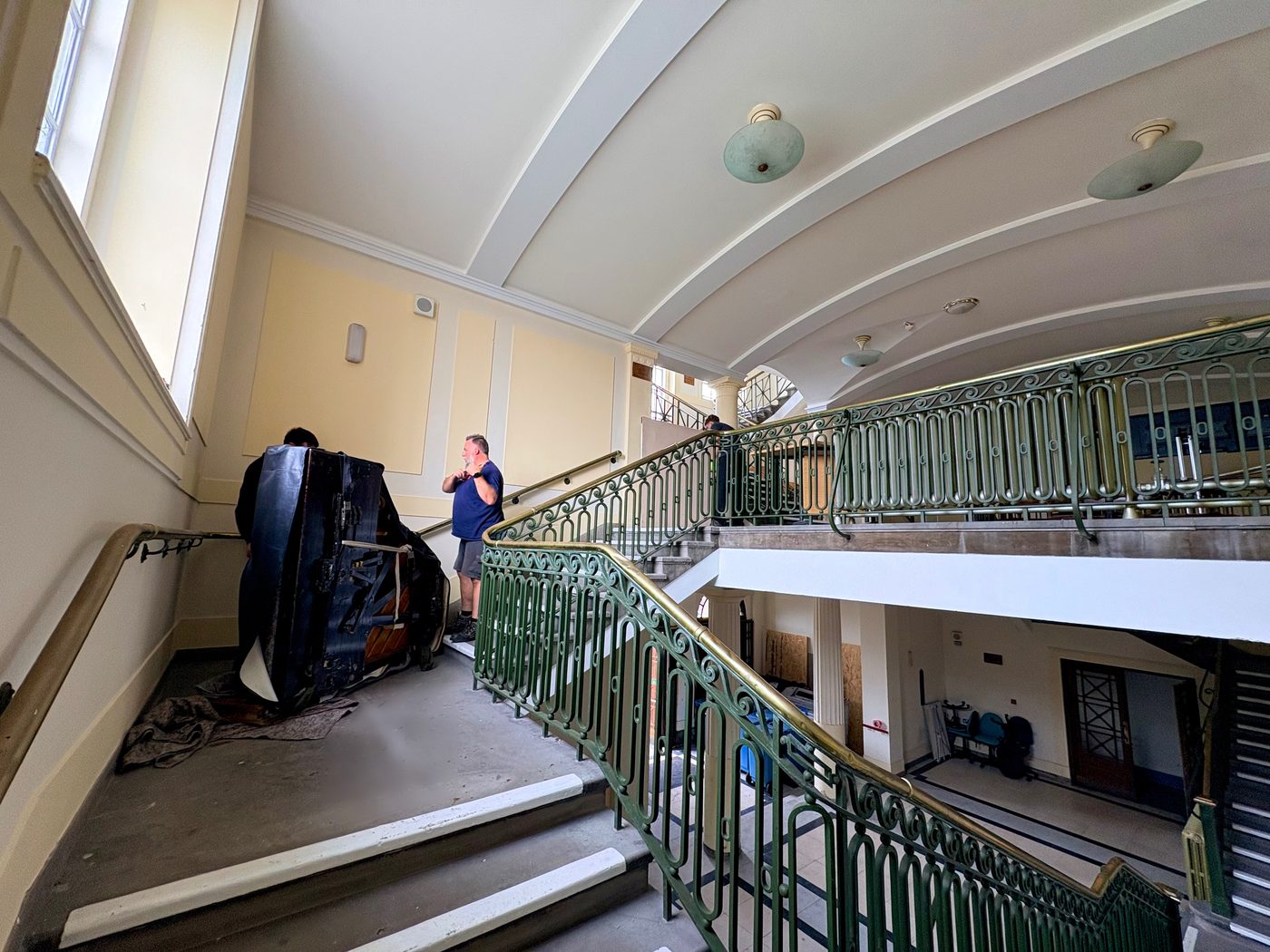
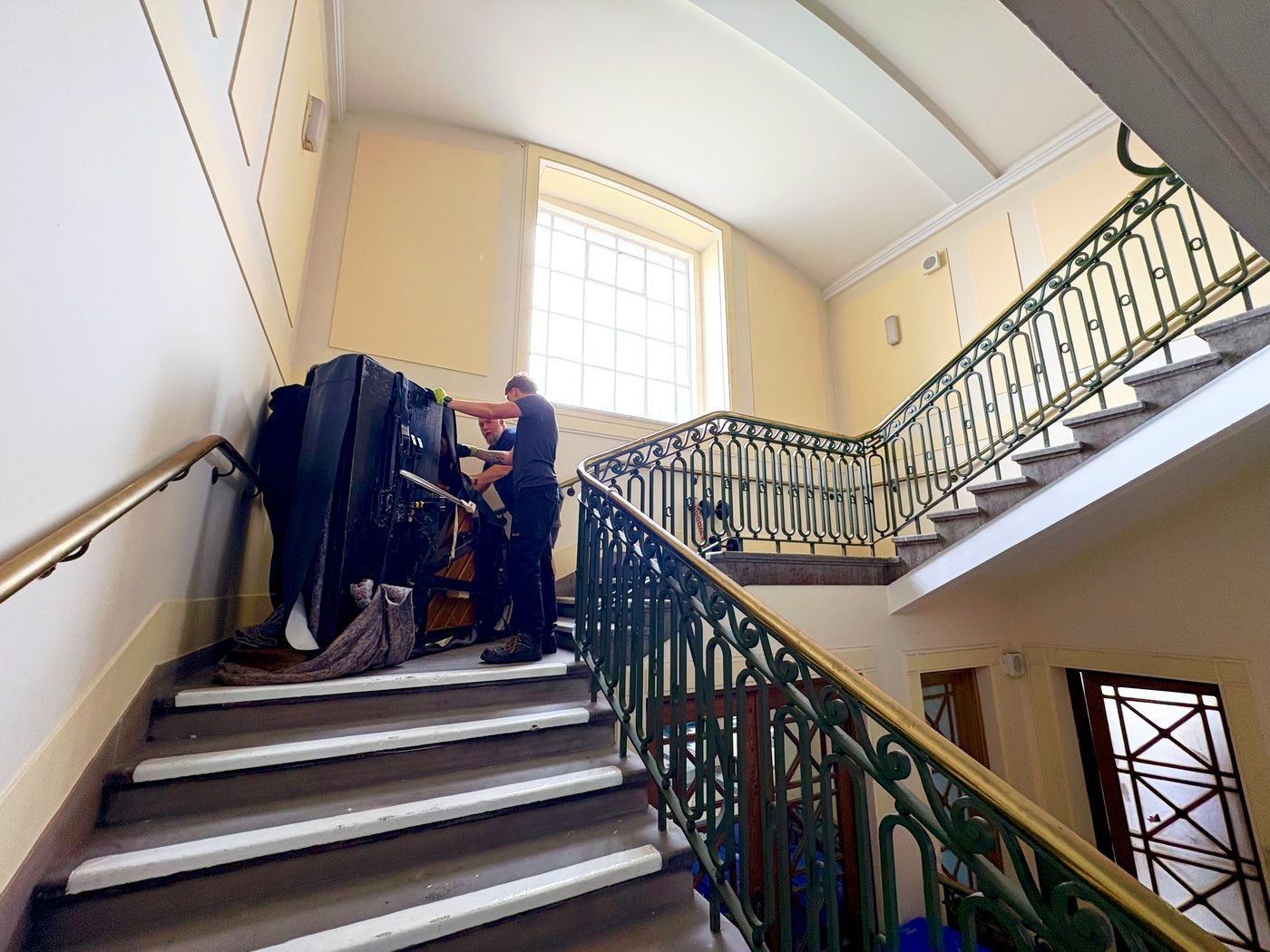
Some enquiries tell you inside a sentence that they will not be routine. This one arrived through this site at the end of August. A Steinway Model A was sitting at entrance level in Wallasey Town Hall and needed to be on the stage in the Civic Hall. The Civic Hall is five flights up.
By the time it reached us, two removal companies had already been asked, and both had said no.
Why the group handled this one
It is worth being open about how we are structured, because it is the reason this job happened at all.
Piano Logistics Manchester is one brand within a family group of piano specialists that has been trading since 1977, with Bellwoods Removals as the parent business. The brands run their own diaries and their own areas, but crews, vehicles and equipment are shared across the group. When a job needs more of all three than any one branch would normally field, it gets resourced from the whole group rather than declined.
That is what happened here. The enquiry started with us, and the move was delivered by a group crew of four with a piano board and a full set of protection for a Grade II* listed interior. We would rather tell you that plainly than pretend every job is done by whichever brand you happened to ring.
Two firms had already declined it
One company attended, looked at the staircase and withdrew on the spot. The second declined without attending, citing the risk of damage.
Neither deserves criticism for that. Recognising that a job is beyond your kit and your crew, and saying so before you start rather than halfway up, is a mark of competence. It is a great deal better than the alternative.
The difficulty is what the customer is left holding. There is a real gap between "this cannot be done" and "we cannot do this", and someone who has only ever been given the first sentence has no way of telling that they were actually given the second. Two refusals in a row start to feel like a verdict on the piano rather than on the firms.
There was a date attached to it
This was not a piano that could sit where it was while somebody sought a fourth opinion. There was a concert booked in the Civic Hall for 25 September, and the officer who contacted us was working out whether she would have to release the date and start contacting ticket holders.
That is the part most people never see. A piano that will not move is almost never just a piano in the wrong room. Behind it there is usually a programme, a hire agreement, performers with the date in their diary and an audience who have already paid. The instrument is the visible half of the problem and generally the smaller half.
What this means if you look after a venue
Wallasey is west of our usual patch, but the building is not unusual. Every town in Greater Manchester has its equivalent: civic halls, churches, schools, theatres and function rooms built long before anybody gave a thought to how a concert grand would reach the first floor. The staircase is stone or marble, the balustrade is cast iron and listed, the lift is either absent or half the size you need, and the piano has been in the same corner since the 1950s.
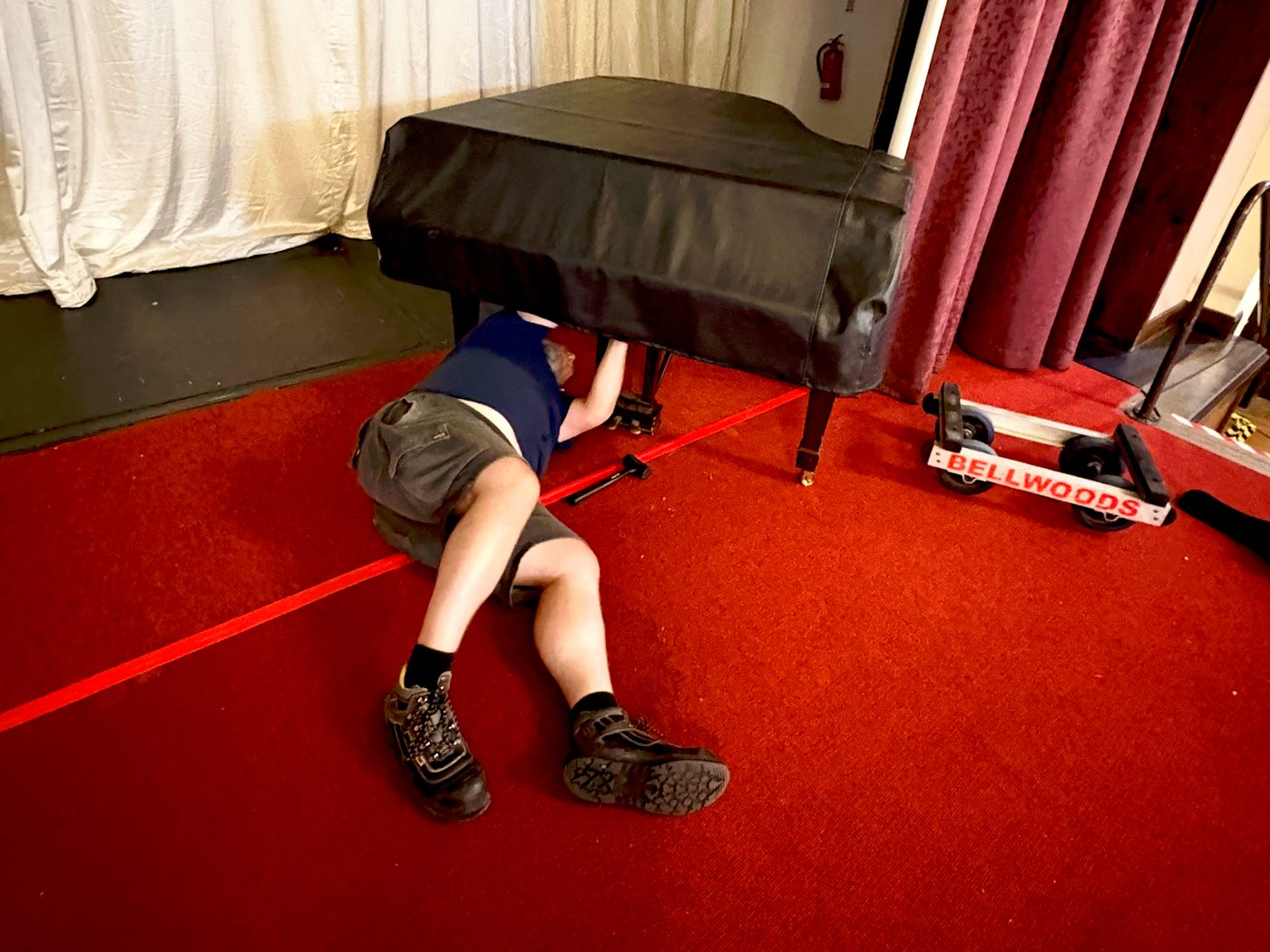
We move pianos into and out of buildings like that across Bolton, Stockport, Salford, Oldham and Trafford. If the piano is only going from one part of a building to another, a stage to a storeroom or a hall to a rehearsal room, that is an internal piano move and it is often the more awkward of the two jobs, because there is no van to make life easier at either end.
Three questions worth asking
If you have been told a piano move is not possible, before you accept that, ask the firm:
- How often do you move pianos? Weekly is a different trade from occasionally.
- What is coming on the van for this job, and how many crew?
- Will you look at the access first, in person or on a video call, before you price it?
A specialist will answer all three without pausing. If the answers are vague, the refusal probably says more about the firm than about your staircase.
The full account
Our parent company has published the detailed write-up of this move, with the rest of the photographs and a fuller explanation of how the climb was managed: a Steinway up five flights at Wallasey Town Hall.
If you have a piano that other people have been reluctant to take on, whether it is a concert grand in a civic building or an upright in a terrace with a tight turn at the top of the stairs, we are happy to look at it. See our piano removal service, ask for a piano removal estimate, or call us on 0161 806 1224.